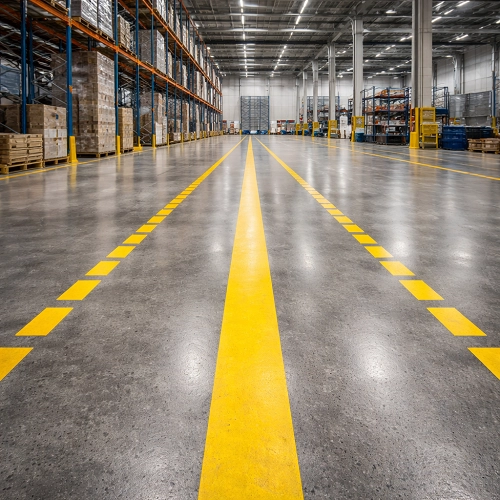
Industrial warehouses are the backbone of modern supply chains, serving as hubs for storage, distribution, and manufacturing. While much attention is often given to logistics and equipment, the flooring of a warehouse is just as crucial. Industrial warehouse flooring not only supports heavy machinery and high traffic but also affects safety, maintenance costs, and overall efficiency. Choosing the right flooring solution is a strategic decision that impacts both operational performance and long-term durability.
Key Considerations for Warehouse Flooring
When selecting flooring for an industrial warehouse, several factors must be considered:
1. Load-Bearing Capacity
Warehouses often house heavy equipment like forklifts, pallet jacks, and industrial racking systems. Flooring must be capable of supporting these loads without cracking or deforming. Concrete is a popular choice due to its high compressive strength, but reinforcement and proper curing are essential for long-term durability.
2. Durability and Wear Resistance
Warehouses experience constant movement of goods, heavy traffic, and potential impacts from dropped materials. Floors must resist abrasion, chipping, and chemical exposure. Options like epoxy coatings and polyurethane overlays provide a protective layer that enhances resistance to wear, stains, and chemical spills.
3. Safety and Slip Resistance
Safety is paramount in warehouse environments. Floors can become slippery due to water, oil, or other spills. Textured coatings, anti-slip additives, or specialized treatments can improve traction and reduce accidents. Additionally, clearly marked pathways and floor markings can enhance operational safety.
4. Maintenance and Cleaning
Efficient warehouse operations require flooring that is easy to clean and maintain. Smooth, non-porous surfaces like polished concrete or resin coatings allow for quick removal of dirt, dust, and spills, minimizing downtime. Floors that are difficult to clean can become hazards over time, impacting both productivity and safety.
5. Chemical and Moisture Resistance
Industrial warehouses often store or handle chemicals, oils, or other corrosive materials. Flooring must withstand exposure without deteriorating. Epoxy and polyurethane systems offer excellent chemical resistance, while proper sealing prevents moisture penetration that can lead to cracking or mold growth.
6. Cost and Lifespan
While budget is always a factor, the lowest upfront cost is not always the most economical in the long term. Durable flooring with low maintenance requirements can save significant costs over its lifespan. Concrete with protective coatings often provides the best balance of durability, safety, and cost-effectiveness.
Popular Flooring Options
1. Concrete
Concrete is the most common industrial warehouse flooring due to its strength and longevity. It can be finished with polishing, sealing, or coating to improve wear resistance, reduce dusting, and enhance appearance.
2. Epoxy-Coated Floors
Epoxy provides a seamless, chemical-resistant, and highly durable surface. It is ideal for high-traffic areas and warehouses where spills are common. Epoxy can also be customized with colors or markings to designate work zones and improve safety.
3. Polyurethane and Urethane Floors
Polyurethane floors are more flexible than epoxy, offering better resistance to impact and temperature changes. They are also less prone to yellowing over time and provide a smooth, seamless finish suitable for hygienic environments.
4. Vinyl and Modular Tiles
For lighter-duty warehouses or areas with frequent layout changes, interlocking vinyl or modular tiles offer quick installation and repair. They are less durable than concrete or epoxy but can be practical in office-adjacent storage areas or low-traffic zones.
Installation Best Practices
Proper installation is essential to ensure longevity and performance:
- Surface preparation: Floors must be clean, dry, and level before coating or overlay application.
- Expansion joints: Accommodate structural movement to prevent cracking.
- Professional application: Coatings like epoxy or polyurethane require precise mixing and curing for optimal performance.
- Regular inspections: Identify early signs of wear or damage to prevent costly repairs.
Industrial warehouse flooring is more than just a surface—it is a critical component of operational efficiency, worker safety, and long-term cost management. Selecting the right flooring solution involves balancing load capacity, durability, safety, maintenance, and budget considerations. Whether opting for reinforced concrete, epoxy coatings, or polyurethane systems, investing in high-quality flooring ensures that a warehouse can withstand the demands of modern industrial operations for years to come.